
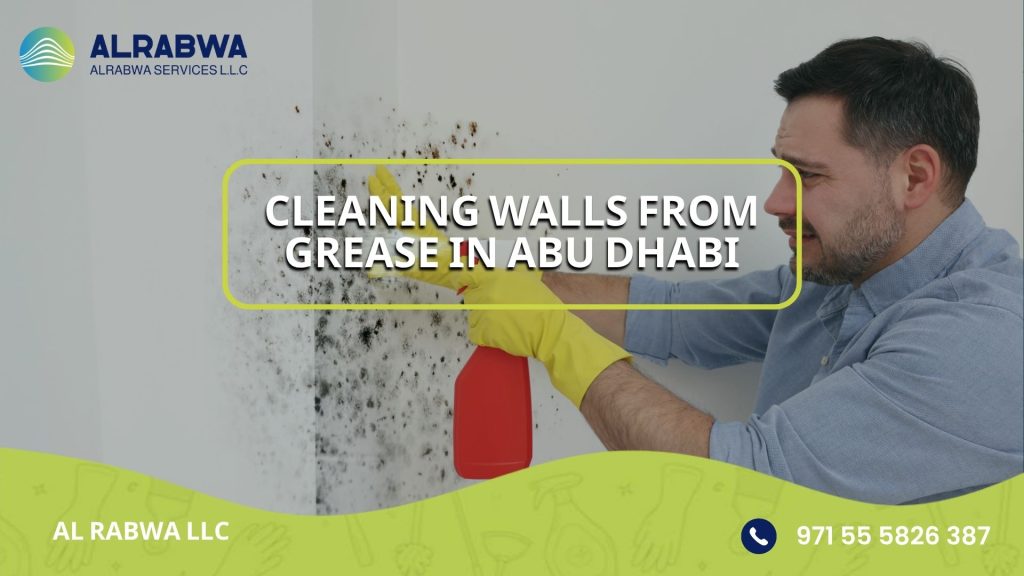
Before cleaning: identify the wall finish
Before choosing a cleaner, establish whether you are dealing with wall paint, ceramic or porcelain tile, natural stone or a specialist covering. Appearance alone is not enough: a glossy finish does not identify a material, and a matte coating may have its own washing restrictions. Check the paint tin, product specification or installation records where available.
Use this table to establish what needs checking. If you cannot identify the finish, avoid selecting a stronger cleaner on appearance alone.
| Wall surface | First check | Main cleaning limit |
|---|---|---|
| Flat or matte painted wall | Paint care guidance and current film condition. | Gentle handling; do not assume it tolerates scrubbing. |
| Satin or higher-sheen painted wall | The specific paint’s permitted cleaning process. | A higher sheen does not remove the need for a test. |
| Ceramic or porcelain tile | Tile finish and approved cleaning products. | Check the grout and adjacent materials separately. |
| Natural-stone wall finish | Stone type, finish and supplier instructions. | Avoid assuming a tile degreaser or acidic recipe is suitable. |
| Recently painted or repaired area | The product’s curing and cleaning instructions. | Touch-dry does not by itself confirm readiness for washing. |
| Unknown, peeling or lifting finish | Assessment of the material and its condition. | Pause wet cleaning until the issue is understood. |
Wallpaper, decorative plasters and other specialist coverings need their own care guidance. Do not transfer the painted-wall steps to them without confirmation.
Test a small area before you remove grease from walls
A surface test checks how the intended cleaner, moisture and wiping technique affect the actual finish. Choose an inconspicuous patch with the same material and coating as the greasy area. Testing the tile below a painted section tells you nothing about the paint. Read both the surface-care guidance and the cleaner label first.
- Photograph the area before the test so you can compare its appearance.
- Use a clean, soft, non-abrasive cloth or sponge.
- Apply the permitted method with light pressure and controlled moisture.
- Remove cleaning residue as directed, without soaking the surface.
- Allow the area to dry before comparing colour, sheen and surface condition.
- Stop if the test changes the finish rather than simply removing grease.
Sherwin-Williams recommends testing the cleaner and technique in an inconspicuous location and checking for changes after drying. Use the instructions for your own paint rather than treating a successful test as permission for any stronger product.
If the cleaner or technique changes, assess compatibility again before extending the work. An uncertain result is a reason to pause, not to repeat the test with more pressure.
How to remove grease from painted walls
Proceed only if the coating permits washing, is intact and passes the surface test. Protect the floor and nearby finishes, and clear enough space to work without leaning against the wall. Keep cleaning liquid away from electrical fittings and service openings; ordinary wall wiping does not include removing or dismantling those fittings.
Sherwin-Williams’ wall-cleaning guidance identifies mild grease-cutting dishwashing soap in warm water as an option for grease splatters, subject to compatibility. Follow the cleaner and paint directions rather than inventing a concentration or leaving the solution on indefinitely.
- Remove loose surface dust gently using a permitted method.
- Wring the cloth thoroughly so it is damp rather than dripping.
- Work in small sections with light pressure.
- Use a clean part of the cloth as grease lifts.
- Remove detergent residue and dry as the care instructions require.
Let the cleaned area dry before deciding whether another pass is appropriate. Do not keep rubbing a remaining patch without checking whether you are seeing grease, a stain or a change in the paint itself.
Flat, satin and newly painted walls: what changes?
Benjamin Moore’s painted-wall guidance distinguishes lower-sheen finishes, which need gentler handling, from higher-sheen finishes that are generally easier to clean. That distinction helps explain why the same pressure should not be applied to every painted wall.
For flat or matte paint, pay particular attention to the test and avoid aggressive repeated rubbing. For satin or glossier paint, still check the product instructions and condition. A change in sheen during cleaning should not be assumed to be a sign that more grease needs removing.
Recently painted walls require another check: has the coating reached the stage at which its manufacturer permits washing? Sherwin-Williams’ maintenance guidance addresses curing before washing. Use the timing for the actual paint and conditions, rather than assigning one waiting period to every product.
If records are unavailable, ask the painter, owner or supplier for the paint details. Do not assume a dry-looking repair has the same cleaning tolerance as the surrounding established finish.
How to remove grease from tiled walls
For ceramic or porcelain wall tiles, check the finish and the cleaner’s permitted uses before treating the grease. Include the grout, sealants and surrounding paint in that check. A tile face may tolerate a product that is unsuitable for an adjoining joint or coating, so avoid spreading one solution across different materials without confirmation.
Daltile’s ceramic and porcelain care guidance recommends testing cleaning products, following their directions and removing residue with a clear-water rinse. It also directs users to the grout manufacturer’s care instructions.
- Test the intended cleaner on a discreet, compatible section.
- Use the application method and dwell time stated for the product.
- Lift the grease with an approved non-abrasive cloth or tool.
- Remove residue as directed without flooding joints or adjacent fittings.
Textured tile may require a different permitted tool from a smooth glazed finish. Check before increasing abrasion. This is a wall-cleaning task, so floor-machine or pressure-washing advice should not be transferred to an interior wall. Stop if the tile surface, grout or adjacent coating changes during the work.
Why grout, sealants and natural stone need separate checks
Grout and sealant lines are part of the cleaning decision, not an afterthought. Record existing gaps, cracking or discolouration before starting. A dark line does not prove that grease is the only issue, and harder brushing does not repair a damaged joint.
Use the grout or sealant maker’s guidance where available. If a joint is damaged or its condition is uncertain, ask for assessment before introducing more moisture or a stronger product. Cleaning the tile face does not establish that a joint has been restored.
Natural-stone wall sections need different product checks from ordinary ceramic tile. The Natural Stone Institute explains that acids can damage calcareous stone and that abrasive products may scratch certain surfaces. Vinegar, lemon and general tile degreasers should therefore not be presented as universal wall-cleaning solutions.
Keep each material boundary in view while working. If the greasy area crosses paint, stone, tile and sealant, confirm a compatible approach for each section instead of applying one product across the entire area.
When to stop: grease marks versus finish damage
Repeated scrubbing is not a reliable next step when a mark remains. Let the area dry, compare it with the original photograph and check whether the finish has changed. Keep the cleaner name and a note of the method used. If the material is uncertain or the coating is affected, pause and ask for assessment before trying a stronger approach.
| Observation | Appropriate next step |
|---|---|
| Paint colour transfers to the cloth | Stop and review the paint condition and permitted method. |
| A shiny or dull patch develops | Assess after drying before any further rubbing. |
| The coating peels, lifts or softens | Request assessment of the finish rather than continuing wet cleaning. |
| Grout or sealant appears damaged | Separate the cleaning request from the repair question. |
| The mark remains after residue is removed | Ask whether staining or a finish issue needs a different response. |
A remaining mark may need assessment or paint maintenance instead of another cleaning attempt. A cleaning service should not promise that every stain can be removed or that damaged paint will return to its original appearance.
What to confirm before arranging wall grease cleaning in Abu Dhabi
For grease on appliances, cabinets or counters, use the kitchen grease guide by material. Wall paint, appliance coatings and cabinet fronts do not share one set of care instructions, even when the grease came from the same cooking area.
If you need help to remove grease from walls, give the provider enough detail to assess the task. Share clear photographs, the approximate area, the finish if known and the products already tried. State the working height and point out peeling paint, repairs or damaged joints. Ask for wall cleaning to be listed explicitly in the agreed scope; it should not be assumed to form part of every kitchen booking.
Discuss the request through Al Rabwa’s deep cleaning service or household cleaning service. Confirm the test, proposed method, access and exclusions before work begins. If repainting or repairs are needed, keep those tasks distinct from the cleaning quote.
Share the wall condition and ask about the cleaning scope.
Frequently asked questions about wall grease removal
What is the first step to remove grease from walls?
Identify the finish and read its care instructions. Test a permitted method on a small inconspicuous area with the same finish, then assess it after drying. Do not assume a product suitable for tile is suitable for nearby paint.
Can I use a strong kitchen degreaser on painted walls?
Do not assume so. Check both the paint instructions and the cleaner’s permitted surfaces. Start with an approved mild approach and a successful test. A product intended for appliances or worktops is not automatically suitable for wall paint.
Why should I wait for the test area to dry?
The test needs to be assessed for changes in colour, sheen, water marks and surface condition after drying. A wet patch alone does not establish the final appearance. Pause if the result is uncertain or the finish has changed.
Can flat and glossy painted walls be cleaned in the same way?
Do not assume identical handling. Lower-sheen finishes generally need a gentler touch, but every paint requires its own care check and surface test. A higher sheen is not permission to use abrasive tools or unrestricted scrubbing.
Can I clean wall tiles without checking the grout?
No. Confirm compatibility with the tile, grout, sealants and nearby materials. Follow the relevant care instructions and test before treating a wider area. Damaged joints may need assessment separately from cleaning the tile face.
Does a remaining grease mark mean I should scrub harder?
No. Review the area after permitted cleaning and drying. A remaining mark could involve staining or a finish issue rather than removable surface grease. Stop if colour transfers, the sheen changes or the coating lifts, and request assessment.

