
Quick answer: Photograph the insect and its location, check accessible areas around food and water, address spills and leaks, and keep a record of further sightings. Request an inspection if identification is uncertain, activity repeats or relevant hiding places cannot be accessed.
Does a Small Cockroach Mean a Baby Cockroach?
Not necessarily. Young cockroaches, known as nymphs, are smaller than adults and do not have developed wings. However, adult size also varies between species.
Do not identify every small cockroach as German or assume that all dark insects in a kitchen are cockroaches. Shape, markings and other features matter alongside size.
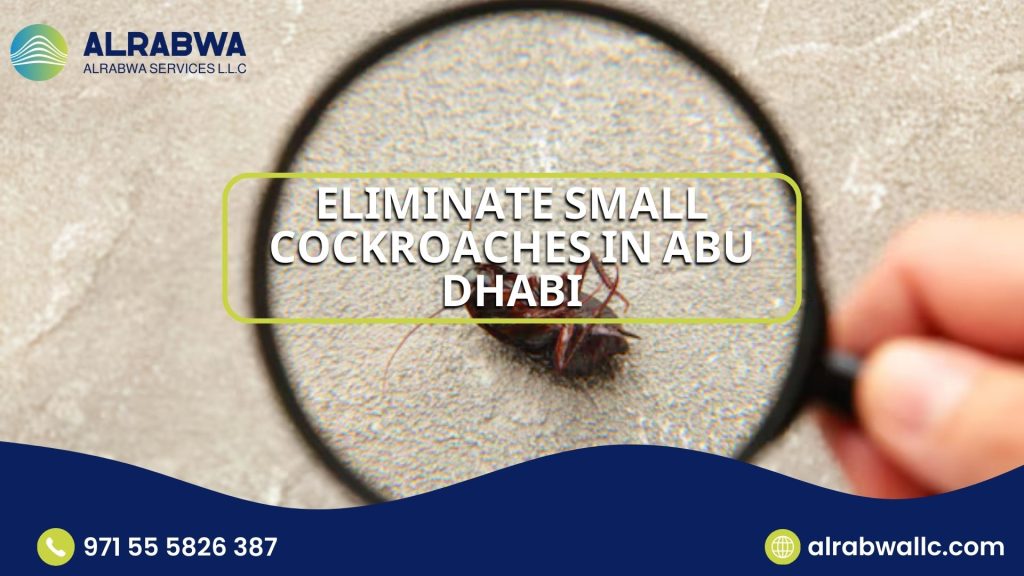
Cockroaches generally have flattened bodies and long antennae. Other insects can be confused with them, so a clear photograph or a securely contained specimen may help a professional identify the finding.
Record whether you are seeing insects of similar appearance in the same location. This gives the inspector useful information without requiring you to diagnose the species yourself.
Record Sightings Before Changing the Area
Make a short note of the first location, the date and what was happening when the insect appeared. Include whether the observation occurred near stored food, water, packaging or an appliance.
Useful details include:
- The room and exact location.
- Whether sightings are isolated or recurring.
- The approximate number observed during each check.
- Photographs showing the insect and surrounding area.
- Previous treatments or products applied nearby.
- Recent deliveries, moved items or maintenance work.
A sighting record helps reveal patterns, but it cannot determine the total number of insects present. Avoid estimating infestation size from one observation or photograph.
Check Accessible Areas Near the Sightings
Use a visual check to gather information, not to dismantle the property. Depending on where activity occurs, accessible cupboard corners, under-sink areas, floor edges and spaces beside appliances may be worth examining.
Look for insects and unfamiliar material such as possible egg cases or droppings. Photograph findings before assuming their source; small dark particles can have other explanations.
Follow a simple sequence:
- Start where the insect was observed.
- Check nearby accessible edges and storage areas.
- Record any food residue, moisture or gaps.
- Note areas you cannot inspect.
- Share the observations when requesting an assessment.
Do not open electrical equipment, remove socket covers or disconnect appliances to reach a suspected hiding place. Ask the appropriate professional to assess restricted or enclosed locations.
Remove Accessible Food Residue
Food storage and cleaning are practical parts of cockroach management. Focus on the areas around activity rather than repeatedly cleaning visible surfaces while overlooking nearby residue.
- Store suitable foods in securely closed containers.
- Remove crumbs, grease and drink spills.
- Clean accessible areas around food preparation equipment.
- Avoid allowing used dishes and food residue to accumulate.
- Review pet-food storage and feeding areas.
- Keep waste containers and the surrounding floor clean.
Choose cleaning methods suitable for each surface. If treatment has already been applied, check the instructions before wiping areas containing products or monitoring devices.
Better housekeeping supports control, but recurring cockroaches should not be dismissed as a cleaning issue alone.
Address Leaks and Persistent Moisture
Review accessible sinks, taps and visible pipe connections for leaks or dampness. Record recurring moisture rather than assuming that drying the surface once resolves the cause.
Arrange appropriate repairs through the property owner or maintenance team where needed. If moisture is inside an enclosed space or close to electrical equipment, leave the investigation to a suitable professional.
Tell the pest-control provider about unresolved repairs. A treatment proposal should account for relevant site conditions rather than assume that all maintenance issues have already been corrected.
A leak near a sighting is useful information, but it does not prove that the insects originate from that exact location.
Reduce Clutter Without Spreading Affected Items
Unnecessary cardboard, paper and tightly packed storage can make areas harder to inspect and maintain. Review packaging and accessible storage near repeated activity.
Before moving items, check for insects or suspected egg cases. Do not transfer potentially affected boxes or small appliances to another room simply to clear the area.
Ask the technician how items requiring attention should be handled. Keep ordinary tidying separate from decisions about treating or discarding a possession.
The aim is to improve access and reduce avoidable hiding opportunities, not to empty every room or replace belongings without an assessment.
Review Gaps and Building Access Points
Note accessible gaps around doors, damaged seals and openings around services. Appropriate repairs and exclusion measures may form part of the management plan.
Do not seal functional ventilation, drainage openings or service components without advice. Ask maintenance personnel to assess openings whose purpose is unclear.
In an apartment or shared building, clarify which areas you control and which require building-management access. Report observations factually rather than assuming a neighbouring unit is responsible.
Coordinate repairs with any existing treatment or monitoring plan so that work does not disturb locations the technician needs to review.
Use Monitoring to Understand the Pattern
Cockroach monitoring devices can help gather evidence about where activity occurs. If a provider recommends them, confirm the device, its locations and the checking instructions.
Keep a location record so that observations can be compared consistently. Do not move devices repeatedly without recording the change.
A catch at one location does not automatically identify the entire source, and an empty device does not prove that the property is clear. Monitoring results need to be interpreted alongside identification and inspection findings.
Also distinguish monitoring traps from pesticide baits. Their purposes and handling requirements are not necessarily the same.
Avoid Unplanned Powders, Sprays and Homemade Mixtures
Do not assume that a naturally occurring powder, essential oil or household mixture is harmless or suitable for the location. Product suitability and precautions must be established rather than inferred from the word “natural”.
Avoid combining products or repeatedly adding applications without understanding what has already been used. If you have an active treatment plan, ask before cleaning or applying another substance near its placements.
Any pesticide used must follow its label, including the permitted pest, application location and precautions. More product does not automatically mean better control.
Tell the technician what you have already applied, where and when. Keep the packaging or product information available rather than describing it only as a general insect spray.
When Should You Request a Professional Inspection?
Arrange an assessment when small cockroaches keep appearing, are seen in additional locations or cannot be confidently identified. Inspection is also useful when relevant areas are inaccessible or previous attempts have not produced a clear improvement.
Prepare the following for the provider:
- Your sighting record and photographs.
- The affected rooms and inaccessible locations.
- Known leaks or outstanding repairs.
- Products or treatments already used.
- Any monitoring observations.
- Shared-building access requirements.
Ask what the findings support, what remains uncertain and which next steps are proposed. Avoid accepting a permanent-elimination promise in place of a clear scope and follow-up arrangement.
If you are comparing providers, use the separate cockroach control company hiring checklist for questions about quotations and service responsibilities.
Keep a Simple Action Record
| Area of review | What to record |
|---|---|
| Identification | Photographs and whether the insect has been professionally identified. |
| Sightings | Date, room, exact location and changes over time. |
| Food and waste | Accessible residue, storage changes and completed cleaning tasks. |
| Moisture | Leaks, damp areas and repair status. |
| Access and storage | Clutter, affected packaging, visible gaps and inaccessible areas. |
| Previous action | Products used, treatment dates and current instructions. |
| Follow-up | The responsible contact and agreed review arrangements. |
Use this record to support decisions. If activity changes, discuss the observations rather than automatically repeating the same cleaning or pesticide application.
Frequently Asked Questions
Are all small cockroaches German cockroaches?
No. Size alone does not establish the species. Small insects may be immature cockroaches, smaller adults or another insect requiring identification.
Do small cockroaches prove that there is a large infestation?
No. They justify attention, but the extent of activity needs assessment. Record repeated sightings and other evidence rather than estimating the population from one insect.
Can cockroaches appear in a clean home?
Yes. Housekeeping is one part of management, but moisture, shelter, incoming items and access conditions can also be relevant. Recurring activity needs a broader review.
Will cleaning alone eliminate small cockroaches?
Cleaning can reduce available food and support control, but it does not guarantee that an established problem is resolved. Identification, site conditions and any necessary treatment must also be considered.
Should I put powder inside appliances or cupboards?
Do not apply a product to a location unless its label permits that use. Avoid opening appliances or electrical components, and ask the provider about suitable methods for inaccessible areas.
How quickly should I expect the problem to improve?
There is no single timeframe for every property and method. Ask the provider what response to expect, what to record and when continuing activity should be reviewed.
Should I move an affected appliance to another room?
Ask for advice first. Moving a potentially affected item can transfer insects and may create access or connection issues. Explain where activity was seen and let the provider recommend the handling arrangements.
Need help assessing small cockroaches in Abu Dhabi? Review Al Rabwa’s cockroach control service in Abu Dhabi and share your photographs, affected locations and previous actions to discuss an inspection and suitable next steps.

